
The difference
a month makes.
Digital Therapy follows a proven transformation process.
Phase 1 - Discovery
• We evaluate two parallel functional tracks:
◦ Track 1 - Technology Discovery
▪ Led by a Technology SME
◦ Track 2 - Finance & Accounting Discovery
▪ Led by a Finance + Accounting SME
• A third team member is the Operations & Process SME
◦ Splits time between the two Discovery Track Leaders
All three SMEs are deployed on site for 4 weeks.
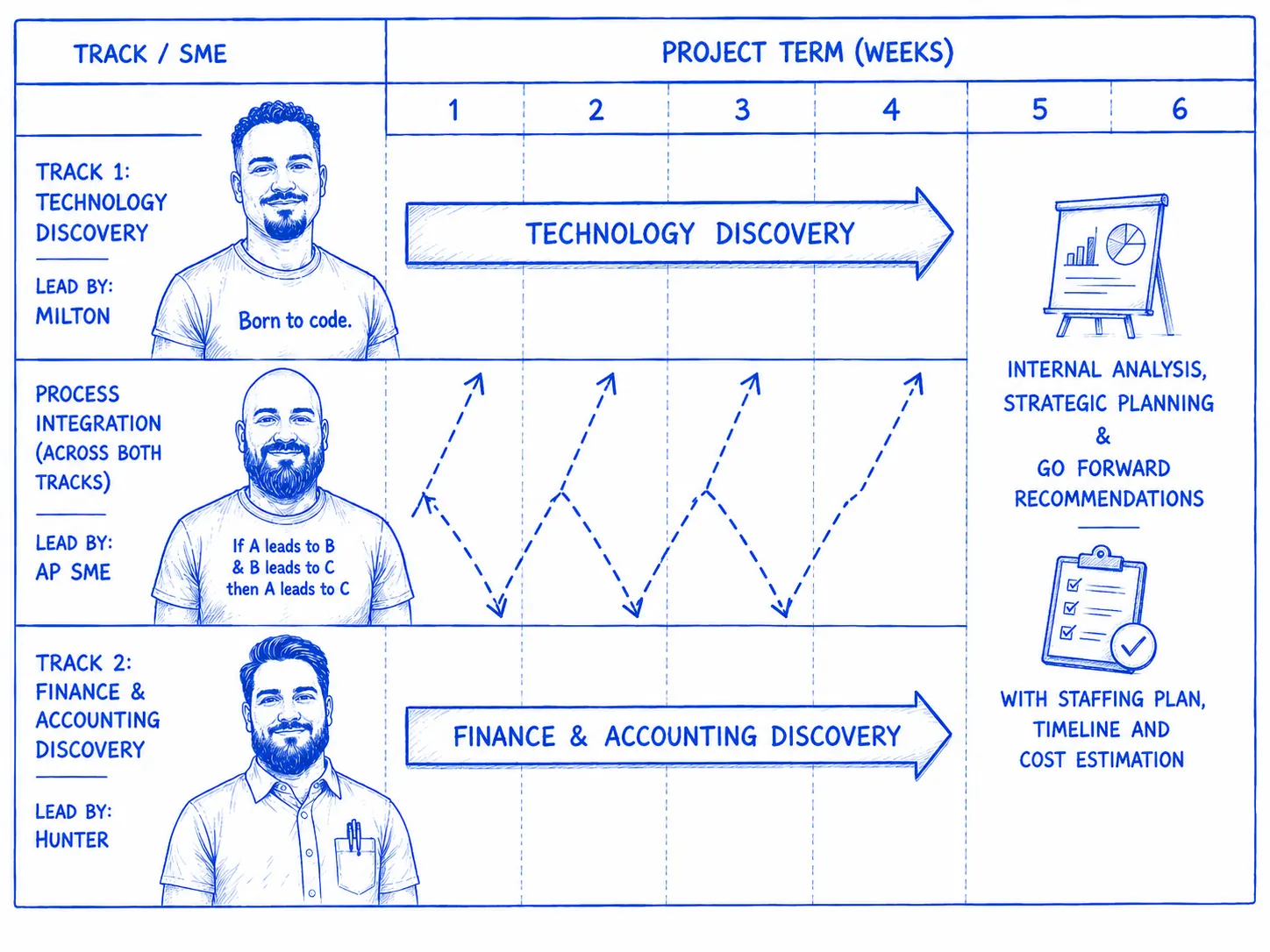

Two parallel tracks
Technology Discovery runs side by side with Finance & Accounting Discovery. The Operations & Process SME splits time between both discovery programs.
Two Track Discovery
Conducted on site | Four Weeks
The Technology & Accounting SMEs lead parallel Discovery tracks while the Operations & Process SME divides time between the two discovery programs to unpack & visualize current-state systems & processes by mapping workflows over swim lanes.
Track 1
Technology Discovery
Lead by: Technology SME

Inventories and maps the client's technology footprint — systems, tools, integrations, data flows, user access, and current-state architecture — then frames the future-state platform and automation strategy.
Track 2
Finance & Accounting Discovery
Lead by: Finance + Accounting SME

Maps AR, AP, the close cycle, and the broader accounting operating model — systems, processes, controls, and tools — to surface where finance is operating behind and where redesign will compound.
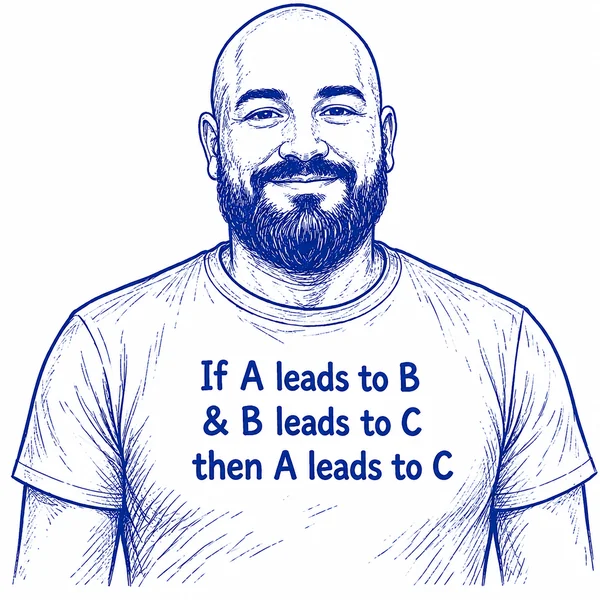
Shared across both tracks
Operations & Process SME splits time across both Discoveries.
Three deliverables form the plan for Phase Two.
The Discovery tracks culminate in a sequenced roadmap for Phase Two: configuration, automation, integration, migration, testing, and onboarding.
01
Graded Priorities List
A ranked operating agenda that clarifies which transformation priorities should move first, why they matter, and how each priority connects to efficiency, growth, risk reduction, reporting visibility, and automation.
02
Visualized Operations
A visual operating model that shows how work happens today, where friction concentrates, and how the future-state workflow should operate.
03
Project Plan
A practical implementation plan that converts discovery into sequenced workstreams, ownership, timelines, and risk controls.
Optimize & automate AP & AR processes.
After Discovery, Digital Therapy dives into AP & AR. Our clients often operate 15 to 30+ days behind, so we help them redesign close systems & processes and often build custom tools to reduce the monthly close burden.
Common lag
15 - 45 days behind
Clients often operate 15 to 30+ days behind, which compresses management visibility, delays decisions, and keeps accounting teams in a permanent catch-up cycle.
System redesign
Automate close procedures
DT helps redesign close systems & processes across AP, AR, reconciliations, approvals, entity workflows, data movement, and exception handling.
Custom tooling
Reduce close anxiety
DT often builds custom tools to reduce the monthly close burden, replacing manual follow-up, spreadsheet-heavy reviews, and recurring data cleanup with governed workflows.
Operating outcome
Close in 5 days. Even less!
Illustrative case example
From close backlog to rhythm & reliability.
Example scenario, not a quoted client result: a multi-entity family office enters each month 20+ days behind, with AP approvals, AR follow-up, reconciliations, and reporting evidence scattered across inboxes, spreadsheets, and accounting exports.
Original State
Month-end remains unresolved deep into the following month, limiting timely visibility into cash, vendor obligations, receivables, and entity-level performance.
Delivery State
Digital Therapy maps the close, redesigns ownership and checkpoints, then builds lightweight exception dashboards and approval tooling around the accounting system.
Impact
The office shifts from reactive cleanup to a managed close calendar, giving leaders a practical path toward the first 3 - 5 days of the next month target.